How Envision Is Growing Independence from the Very Start
By Envision Marketing • Jan 21, 2026
Blog Content
By mid-morning at the Cathy G. Hudson Envision Child Development Center (ECDC), children are already practicing skills they will rely on throughout their lives. Toddlers trace textured shapes to build tactile discrimination and fine motor control. In another classroom, preschoolers act out a story they’ve just heard, strengthening language, memory, and sequencing through movement. Music follows—an exercise in rhythm, coordination, and listening. This is not enrichment layered on top of childcare. It is intentional skill development, delivered early.
For more than 15 years, ECDC has focused on a core premise: independence is not introduced later in life, it is developed from the start. Early childhood is when confidence, communication, and problem-solving begin to form, particularly for children with vision loss who must learn to navigate the world differently.
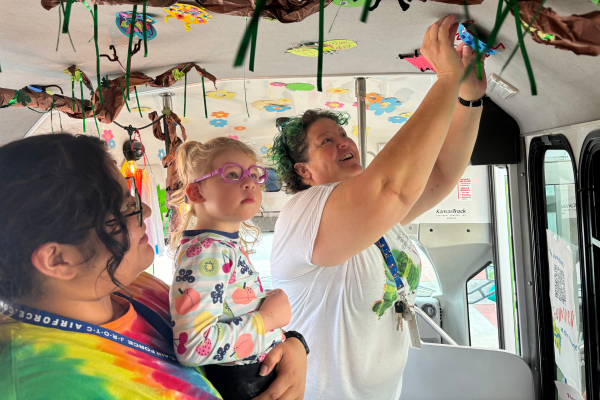
Each week at ECDC is structured around this approach. Daily storytelling and pretend play support vocabulary growth and comprehension. Art activities emphasize texture, contrast, and form to strengthen sensory processing and hand control. Music and movement develop spatial awareness and coordination. These experiences are designed to build functional skills children will use in classrooms, communities, and daily routines.
Learning also extends beyond ECDC’s walls. Community partners bring hands-on experiences directly into the center, while children regularly go out into the community to apply what they are learning in real environments. For children with vision loss, this exposure is critical. Skills transfer does not happen automatically, it must be practiced.
For families, ECDC plays a practical role during what can be an overwhelming time. By bringing education, community support, and providers directly into the center, parents are able to manage care without juggling multiple appointments.
“We’re not here to replicate traditional daycare,” said Teresa Houston, ECDC Director. “Our role is to support families who need something more specialized and to make sure children are building the skills they’ll need as they grow.”
The impact of early access becomes clearer over time. Some former ECDC students return to Envision later in life, including as employees—evidence of how early skill development can influence confidence and independence well beyond childhood. ECDC prepares children not just for their next classroom, but for how they move through the world.