Turning Research into Opportunity: Understanding the 57% Employment Gap
By Envision Marketing • Feb 20, 2026
Blog Content
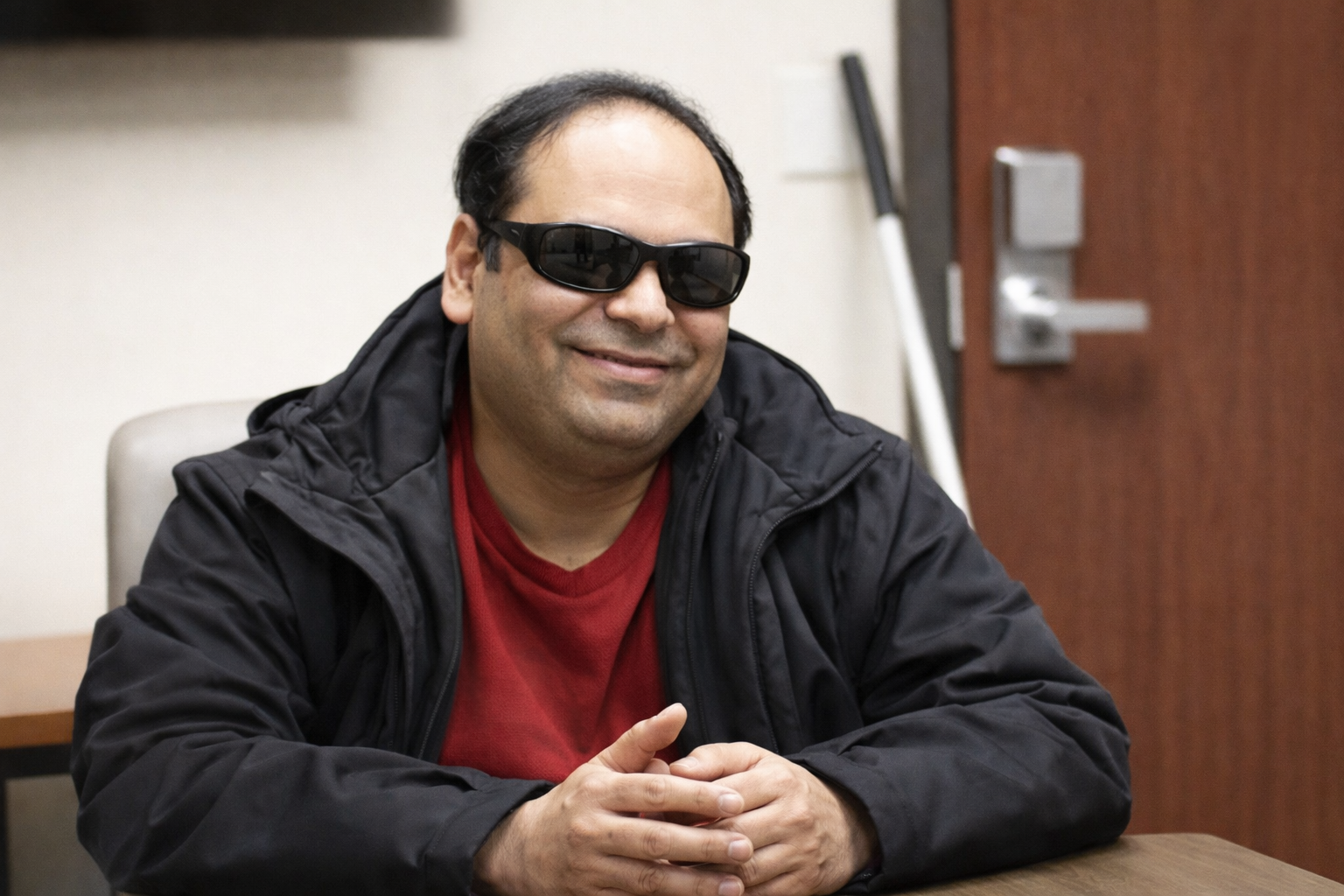
Across the United States, nearly 57% of working-age adults who are blind or visually impaired are not employed. This represents a significant gap between talent and opportunity and highlights the need for continued innovation, research, and cross-sector partnership. At the Envision Research Institute (ERI), we recognize that this 57% reflects capable, talented individuals who are ready to work when systems are designed with access in mind. To change these numbers, we first have to understand the specific, often hidden hurdles that stand in the way. That is precisely the question Rakesh Babu, Ph.D., Lead Accessibility Scientist at the Envision Research Institute (ERI), set out to answer. He is leading a major research project with Bosma Enterprises to find out what truly keeps adults with vision loss out of the workforce.
This study examines why many people remain outside the workforce despite advances in technology and policy. By looking at everything from personal confidence to the way offices are set up, Dr. Babu and the team at Bosma want to create better job training and help employers see the value of every candidate.
The project recently hit a major milestone with the finish of Phase I, which included surveying more than 325 working age adults, with vision loss, from across the country. These participants ranked 29 different roadblocks to finding work, such as computer software that doesn't work with screen readers or the lack of reliable transportation. The results of this study, which are currently being prepared for publication, show us exactly which barriers are the most damaging today. Spotting these obstacles is the first step toward clearing them.
The research shows that while many employers still worry about the cost or safety of hiring someone who is blind or low vision, concerns that research continues to challenge, the real problems are often more technical and structural. These include "cash cliffs" where government benefits might be cut off too quickly if someone starts working, and the simple fact that many hiring managers still have low expectations for what people with vision loss can achieve. As one Envision employee put it, “A lot of people throw us to the wayside because they think we’re not whole. Employers like Envision give us that back.”
Looking ahead, the research is moving into Phase II, where the team will conduct one-on-one interviews to hear the personal stories behind the data. These conversations will help us understand how these challenges affect a person's daily life and confidence, eventually leading to better policies and real-world solutions.
When workplaces are designed with access from the start, organizations become stronger and more innovative. Inclusive hiring is not charity — it is smart business. Employees who are blind or low vision bring resilience, adaptability, and creative problem-solving to industries ranging from technology to customer service.
As Dr. Babu says, “Many of the individuals who participated in the survey expressed their willingness to return to the workforce if the conditions were more favorable. This research will help identify exactly what needs to change to meet those conditions, and get these individuals back to work."